
The research group led by Prof. Ruijiao Dong at the Shanghai Jiao Tong University's Shanghai Center for Systems Biomedicine have recently published a paper titled “Controlled Optically Active Hierarchical Nanostructures of Side-Chain Sequence-Regulated Graphene Nanoribbons” in the journal Advanced Science. The study establishes the efficient bottom-up liquid-phase synthesis strategy for atomically precise side-chain sequence control of graphene nanoribbons (GNRs). It breaks the long-standing bottleneck of structural unpredictability in conventional GNR side-chain design, thereby enabling programmable molecular-level material construction. Through sequence regulation, the team fabricated optically active hierarchical nanostructures with tunable optical properties, paving a new path for the structural design, performance tuning, and advanced functional applications of GNRs.
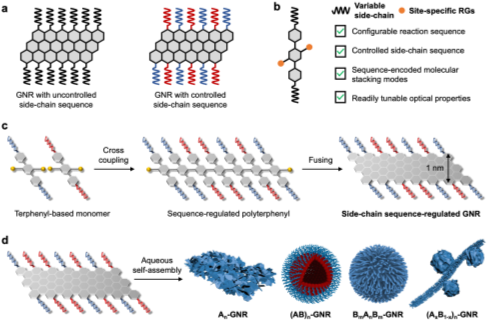
Figure 1. Design of hierarchical multifunctional nanostructures based on precise side-chain sequence regulation of graphene nanoribbons.
GNRs are one-dimensional graphene derivatives with atomically precise structures and exceptional physicochemical properties, holding wide promise for electronics, energy storage and bioimaging. While existing methods can control GNR backbone features (length, width, edge configuration), molecular-level precision regulation of side-chain sequence and functionality has long remained a critical challenge, limiting the multifunctional integration and solution processability of GNR-based materials. Inspired by the sequence-defined hierarchical functions of natural DNA and proteins, the team explored precise side-chain sequence regulation to unlock new design and functional expansion possibilities for GNRs. To address this challenge, the team developed a cross-coupling polymerization strategy integrating Yamamoto and Suzuki coupling reactions, using triphenyl monomers with hydrophilic triethylene glycol (EG3) or hydrophobic pentyl side chains as building blocks. Via rational design of polymerization sequence and conditions, they synthesized four GNRs with well-defined side-chain sequences: homopolymer, alternating, block, and statistical structures. This strategy delivers multiple core advantages, with high efficiency and controllability as reactions proceed under mild liquid-phase conditions with yields up to 87%, supporting scalable production. It also realizes precise sequence definition, as accurate side-chain sequence resolution confirmed by mass spectrometry and high-temperature NMR enables true sequence-programmed design. Meanwhile, the functional side chains weaken inter-GNR π–π interactions, ensuring superior solubility in common solvents such as DMF and methanol to facilitate downstream processing and applications.
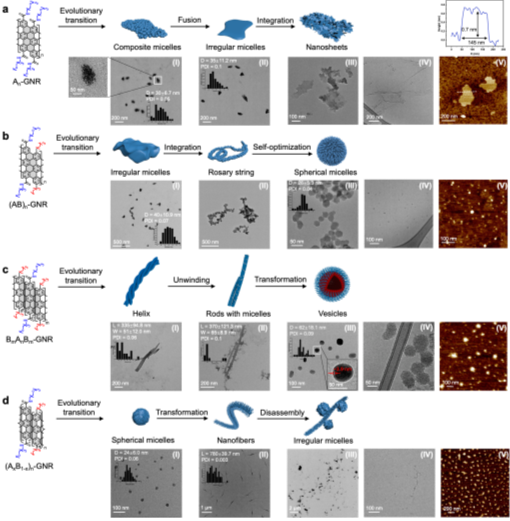
Figure 2. Sequence-encoded hierarchical nanostructures of structurally defined graphene nanoribbons.
The study confirms that side-chain sequence dictates GNR self-assembly behavior. Characterizations via transmission electron microscopy (TEM), cryo-electron microscopy (cryo-TEM) and atomic force microscopy (AFM) revealed distinct solution assembly morphologies for sequence-defined GNRs. Homopolymer An-GNR self-assembles into ~0.7 nm-thick nanosheets, while alternating (AB)n-GNR forms spherical micelles with an average diameter of 26 ± 5.3 nm. Block-type BmAnBm-GNR undergoes stepwise structural evolution from helices to nanorods and finally to vesicles with an average diameter of 62 ± 18.1 nm, and statistical (AxB1–x)n-GNR presents a morphological transition from spherical micelles to nanofibers and eventually to irregular aggregates. These results verify that programmable side-chain sequences enable fully controlled hierarchical assembly of GNRs.
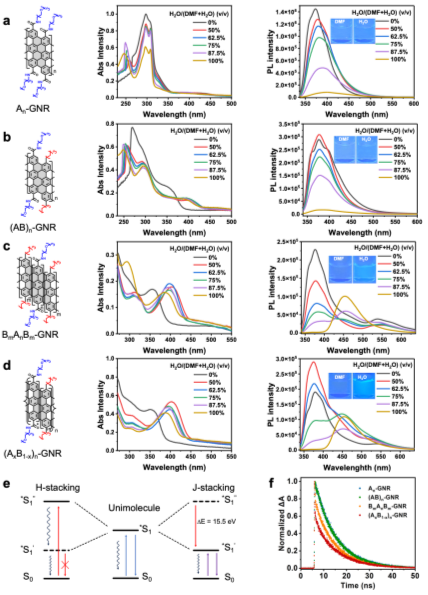
Figure 3. Tunable optical properties of graphene nanoribbon-based nanostructures regulated by side-chain sequence.
Side-chain sequences fine-tune GNR optical properties by regulating molecular packing modes. Different sequences drive distinct H- or J-aggregation, leading to drastically different optical responses: homopolymer and alternating GNRs mainly adopt H-type packing, showing pronounced fluorescence quenching with stable spectral peaks; block and statistical GNRs favor J-type aggregates, with significant red shifts (UV-vis absorption: 356 nm to 400 nm; fluorescence emission: 375 nm to 455 nm) and excellent fluorescence stability (no significant decay over 60 days), making them ideal for bioimaging applications. To elucidate the regulatory mechanism, the team combined coarse-grained and all-atom molecular dynamics simulations to reveal the “sequence-encoded molecular packing” principle: hydrophilic EG3 side chains form a protective shell to suppress excessive aggregation, while hydrophobic pentyl side chains enhance intermolecular interactions to promote higher-order assembly. Consecutive hydrophobic segments in block-type GNRs strongly reinforce hydrophobic interactions, stabilizing J-aggregated structures and driving their unique optical responses.
This work overcomes the long-standing challenge of precise side-chain sequence control for GNRs, establishing a material system with defined sequences, programmable structures and tunable properties. It not only enables custom optical response devices for optoelectronics, but also offers promising candidates for cell imaging and drug delivery in biomedicine. The synthetic and regulatory strategy also provides a general framework for sequence design of other conjugated polymers, advancing the precision construction of function-oriented materials.
Prof. Ruijiao Dong from the Shanghai Center for Systems Biomedicine, Shanghai Jiao Tong University, is the corresponding author of this work. The co-first authors are Baiyang Chen and Kaiyuan Song, and Li Yu. The work was conducted in collaboration with Professor Zhaoguo Zhang, Professor Yongfeng Zhou, and Professor Xinyuan Zhu from the School of Chemistry and Chemical Engineering. This research was supported by the National Natural Science Foundation of China (Outstanding Young Scholars Fund Overseas and General Program), the Shanghai Natural Science Foundation, and related funding programs.
Full text available at: http://doi.org/10.1002/advs.202523362
Source: Dong Research Group

Address:800 Dongchuan Road, Shangha
Fax:200240
Tel:021-34206059