
A research team led by Professor Ze-Guang Han and Dr. Lan Wang from Shanghai Center for Systems Biomedicine, Shanghai Jiao Tong University, has discovered critical role of Arid1a deficiency in the pathogenesis of metabolic dysfunction-associated steatohepatitis (MASH) and hepatocellular carcinoma (HCC). Their study, titled “Arid1a deficiency promotes metabolic dysfunction-associated steatohepatitis and hepatocellular carcinoma by disrupting the FXR-gut microbiota-bile acid axis”, was published in Cancer Letters.
ARID1A, a key component of the SWI/SNF chromatin remodeling complex, is frequently mutated in both non-tumorous human tissues and various malignancies. However, its specific role in MASH and HCC development has remained elusive and controversial. Given the established significance of the gut-liver axis in liver disease progression, the research team sought to investigate whether gut microbiota contribute to Arid1a deficiency-induced hepatic pathologies.
The team demonstrated that Arid1a liver-specific deletion triggers MASH and HCC development. This finding establishes Arid1a as a critical tumor suppressor in the liver. Remarkably, gut microbiota depletion using an antibiotic cocktail substantially attenuated MASH progression and reduced HCC burden in Arid1a-deficient mice. This indicates that the gut microbiome serves as an essential mediator of Arid1a deficiency-induced liver disease.
16S rRNA-seq and metagenomic analyses revealed significant enrichment of bacterial taxa harboring bile salt hydrolase (BSH) genes, including Bacteroidia and Clostridia. The abundance of BSH enzyme genes (e.g., bsh 1a, bsh 1b) and bile acid 5β-reductase genes (baiCD) was also markedly increased. Notably, depletion of these bacteria with vancomycin ameliorated MASH pathologies.
Mechanistically, ARID1A deficiency reduces chromatin accessibility at the FXR (farnesoid X receptor) promoter, thereby impairing SWI/SNF complex binding and suppressing FXR transcription. As FXR governs bile acid homeostasis, its downregulation leads to dysregulated bile acid metabolism. Notably, treatment with the Fxr agonist obeticholic acid (OCA) ameliorates MASH pathologies.
Dysregulated bile acid metabolism reshapes the bile acid pool, marked by accumulation of the primary bile acid taurocholic acid (TCA) and the secondary bile acid taurodeoxycholic acid (TDCA). TDCA administration markedly aggravated hepatic inflammation and fibrosis in Arid1a-deficient mice via enhanced neutrophil infiltration and hepatic stellate cell activation. Notably, cholestyramine-facilitated bile acid clearance ameliorated MASH.
These findings establish the ARID1A–FXR–bile acid–gut microbiota axis as a pathogenic driver of MASH and HCC, offering mechanism-based therapeutic strategies for patients carrying ARID1A mutations.
The study’s co-first authors are Ph.D. candidate Shu-Jin Song and Dr. Lan Wang, Associated Professor at Shanghai Center for Systems Biomedicine, Shanghai Jiao Tong University. The corresponding authors are Professor Ze-Guang Han and Dr. Lan Wang.
This work was supported by the National Natural Science Foundation of China, the National Key Research and Development Program of China, Natural Science Foundation of Shanghai and the Fundamental Research Funds for the Central Universities.
For further details, the full paper can be accessed in Cancer Letters.
(https://doi.org/10.1016/j.canlet.2026.218567)
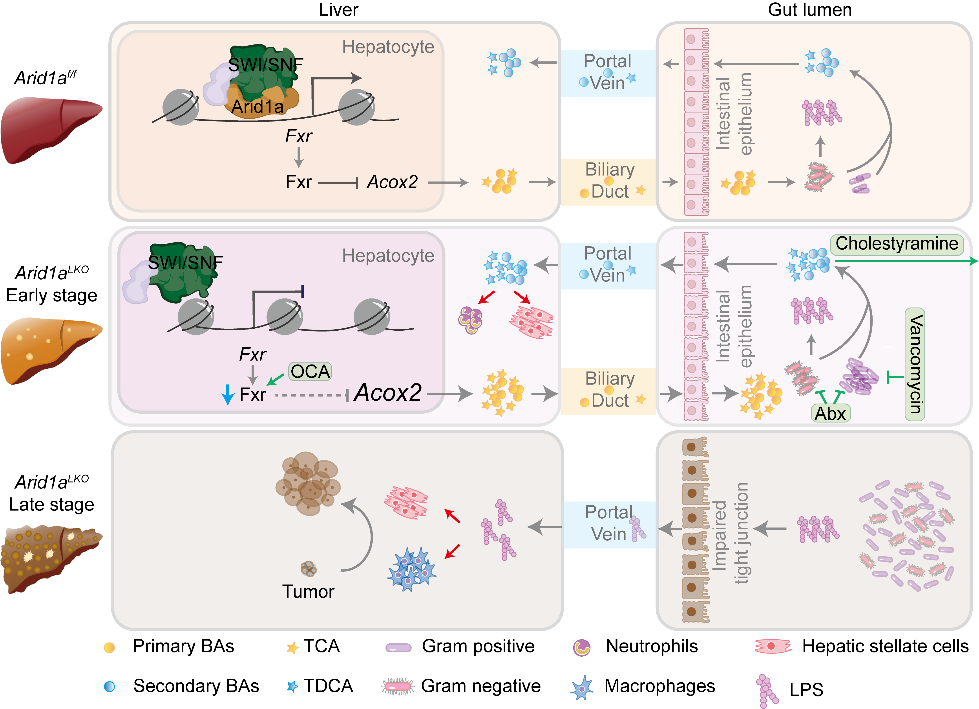
Figure 1. Proposed mechanism of MASH and HCC development in Arid1a deficiency.

Address:800 Dongchuan Road, Shangha
Fax:200240
Tel:021-34206059